I never thought a jury summons would affect me emotionally.
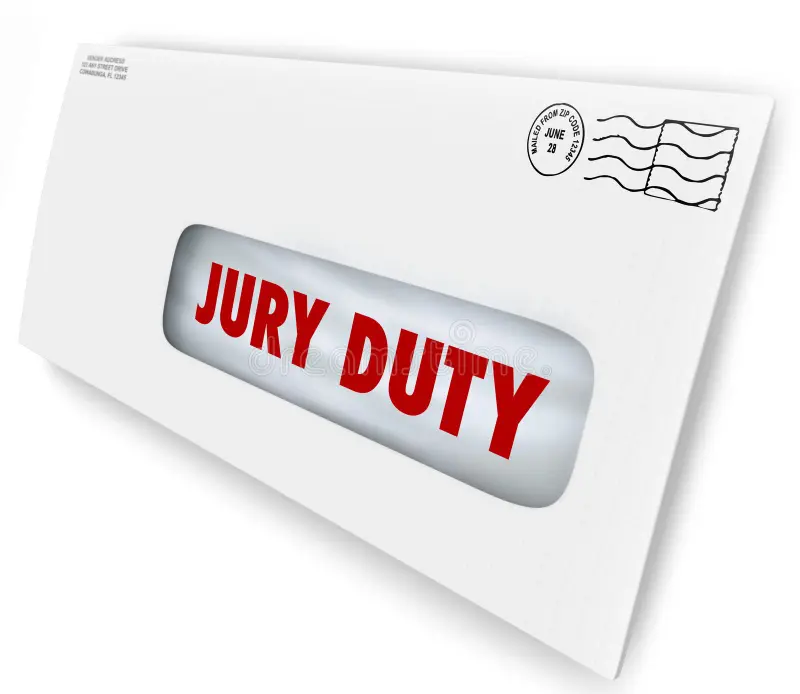
When I first opened the envelope, I saw it as another official responsibility. There was a date, a courthouse location, instructions, and information about jury service.
Normally, I would have put the date on my calendar and made arrangements.
But this time was different.
I was already struggling with my mental health.
My life had become unpredictable. Some mornings I felt relatively stable. Other days, getting through ordinary responsibilities required enormous effort. My sleep was inconsistent, my concentration was poor, and stressful situations could cause my anxiety to increase quickly.
Then I received the jury summons.
Suddenly, something that looked simple on paper felt overwhelming.
“What If I Can’t Handle Being in Court?”
That was the question that stayed in my mind.
I wasn’t thinking about avoiding civic responsibility.
I was thinking about whether I could actually sit in a courtroom, listen to complicated information, concentrate for long periods, communicate appropriately, and remain emotionally stable.
Mental-health problems are sometimes difficult to explain because there may be no obvious physical sign.
Someone can look completely normal while privately dealing with intense anxiety, panic symptoms, depression, emotional instability, poor sleep, or difficulty concentrating.
That was how I felt.
I knew I needed to take the situation seriously rather than simply ignore the summons.
Searching for Answers Online
Like many people, I started searching online.
I typed phrases such as:
mental health and jury duty
doctor’s note for jury duty
medical excuse for jury duty
psychiatric documentation for jury duty
jury duty postponement due to mental health
can a doctor write a note for jury duty
The more I searched, the more complicated the situation appeared.
I realized that there was a major difference between simply wanting to skip jury duty and having a genuine medical condition that may affect someone’s ability to participate.
That distinction changed how I approached the entire situation.
My Experience With NextLevelUrgentCareTexas.us
During my research, I came across NextLevelUrgentCareTexas.us.
What caught my attention was the focus on medical documentation rather than simply promising that someone could automatically be excused from an obligation.
That was important to me.
I wasn’t looking for someone to invent a reason.
I wanted to understand whether my actual health situation could be medically evaluated and whether appropriate documentation could be provided if clinically justified.
The website explains that requests are reviewed individually and that eligible jury-duty-related medical documentation can involve temporary medical conditions affecting attendance.
That made the process feel more realistic.
I Learned That a Medical Note Isn’t a Court Decision
One of the biggest lessons from my experience was understanding the difference between medical documentation and a legal decision.
A healthcare professional can evaluate a patient’s health.
If medically appropriate, the provider may document relevant symptoms, limitations, or recommendations.
But the healthcare provider does not control the court.
The court or jury administration office determines what happens with a jury summons according to its own procedures.
That means receiving medical documentation does not automatically mean someone is legally excused from jury duty.
This distinction is important for anyone searching for a jury duty medical excuse.
The correct goal should be accurate medical documentation—not a guaranteed outcome.
Talking About Mental Health Was Difficult
The hardest part for me was explaining what was happening.
Talking about physical symptoms can sometimes feel easier.
You can say that your back hurts.
You can explain that you recently had surgery.
You can describe a fever or infection.
Mental health can feel different.
I had to explain that my ability to concentrate was affected.
I had to describe how stressful environments affected me.
I had to be honest about the instability I was experiencing.
I also had to accept that a healthcare professional would need to make an independent assessment.
That was actually reassuring.
I wasn’t expected to diagnose myself or decide what medical conclusion should appear on a document.
Mental Health Is About Function, Not Just a Label
Another thing I learned was that a diagnosis alone does not tell the whole story.
Two people can have the same diagnosis and have completely different levels of functioning.
One person may be able to work normally and participate in jury service.
Another person may currently be experiencing symptoms that interfere significantly with concentration, attendance, communication, or the ability to tolerate a stressful environment.
That is why the current medical situation matters.
For someone experiencing a genuine mental-health difficulty, useful conversations with a healthcare professional can focus on how symptoms are affecting everyday functioning.
For example:
- Is concentration significantly impaired?
- Is prolonged stress difficult to tolerate?
- Are symptoms interfering with normal activities?
- Is treatment currently being adjusted?
- Are appointments or recovery requirements affecting availability?
- Does the person have difficulty remaining in demanding environments?
These are very different questions from simply asking, “How do I get out of jury duty?”
The Importance of Honest Documentation
I also realized that medical documentation should tell the truth.
A person shouldn’t exaggerate symptoms because they want a particular outcome.
A healthcare provider shouldn’t document something that isn’t supported by an appropriate evaluation.
And a patient shouldn’t assume that an online medical note automatically satisfies the requirements of a particular court.
The safest approach is to find out exactly what the court requires.
Some courts may have specific forms, deadlines, or procedures for medical requests.
That means the jury summons itself is an important document.
I learned to read the instructions carefully rather than relying entirely on what I found through online searches.
What If You Are Already Struggling With Work?
My mental-health problems were also affecting my work.
That created another layer of confusion.
I started seeing searches about FMLA mental health leave, FMLA medical certification, mental health documentation for work, and doctor’s notes for medical leave.
But I learned that jury duty and employment-related medical leave are not the same thing.
A jury-duty request concerns participation in a court proceeding.
FMLA concerns qualifying employment-related leave under applicable requirements.
One medical document should not automatically be assumed to satisfy every separate administrative requirement.
This was particularly important because I didn’t want to give my employer unnecessary private medical information.
Privacy Matters
Mental-health documentation can contain sensitive information.
I began asking myself:
“Does everyone who receives this document need to know everything about my condition?”
Probably not.
The appropriate amount of information depends on the purpose of the document and the requirements of the recipient.
A court may require particular information to consider a jury-duty request.
An employer may require specific information for a leave or attendance process.
A healthcare provider may maintain much more detailed clinical information in the medical record.
Those are different situations.
Good medical documentation should be relevant to its purpose.
The Human Side of Jury Duty
This experience also changed the way I think about other people who request medical consideration for jury service.
Before my own experience, I might have assumed that someone asking to postpone jury duty simply didn’t want to participate.
Now I understand that there can be an entirely different story behind the request.
Someone might be recovering from an illness.
Someone may have recently undergone a procedure.
Someone might have mobility limitations.
Someone might be dealing with severe anxiety or another mental-health problem.
Someone may be attending frequent medical appointments.
From the outside, you may not see any of it.
The person may simply look like someone who doesn’t want to serve.
But their reality may be very different.
My Biggest Lesson From NextLevelUrgentCareTexas.us
My biggest lesson wasn’t about finding a “jury duty excuse.”
It was about understanding the difference between medical evaluation, medical documentation, and court approval.
Those are three separate things.
A healthcare professional evaluates the patient.
Appropriate documentation may be prepared when medically justified.
The court determines how the jury-duty request is handled.
That process protects the integrity of both healthcare and the court system.
It also gives patients a responsible way to communicate genuine health difficulties.
If You Receive a Jury Summons While Experiencing Mental-Health Problems
If you are dealing with mental-health instability when a jury summons arrives, don’t simply ignore it.
Read the summons carefully.
Check the court’s instructions and deadlines.
If you believe your health affects your ability to participate, speak honestly with an appropriate healthcare professional.
Explain your actual symptoms and how they affect your functioning.
Ask what documentation, if any, can appropriately be provided.
Then follow the court’s submission procedure.
Do not assume that a doctor’s note automatically excuses you.
Do not submit false information.
And do not wait until the last minute if the court has a deadline for medical requests.
A Different Perspective on “Jury Duty Medical Excuse”
Looking back, I think the phrase “jury duty medical excuse” can make the situation sound much simpler than it really is.
For someone like me, the issue wasn’t about escaping responsibility.
It was about being honest about my health.
I wanted to know whether I was medically capable of participating.
I wanted to understand what documentation might be appropriate.
And I wanted to follow the correct process rather than simply ignoring an official summons.
My experience with NextLevelUrgentCareTexas.us gave me another perspective on the role healthcare documentation can play when illness and everyday responsibilities collide.
The most important thing I learned was simple:
A medical document should explain a genuine medical situation—not guarantee a particular result.
For people searching online for doctor’s note for jury duty, mental health jury duty excuse, medical excuse for jury duty, psychiatric documentation for jury duty, jury duty postponement due to illness, medical documentation for jury service, or doctor note online USA, that distinction is worth understanding.
Sometimes the person behind the Google search isn’t trying to avoid responsibility.
Sometimes they are simply trying to find the right way to explain that they are not currently functioning at their best.
And sometimes, the most responsible thing a person can do is ask for professional help, document the truth, and allow the appropriate court to make the final decision.
