
I came across a discussion about service dogs that initially seemed like a simple argument about proof.
One person questioned what a hotel employee can realistically do when a guest says their dog is a service animal. The concern was straightforward: if someone can simply answer “yes” when asked whether the dog is a service animal, what prevents someone from giving a false answer?
Another person raised the opposite concern: privacy.
Not everyone is entitled to know a disabled person’s diagnosis, medical history or private health information.
Then came a question that caught my attention:
“What proof do you want? A doctor’s note?”
That question opened up a much bigger issue for me.
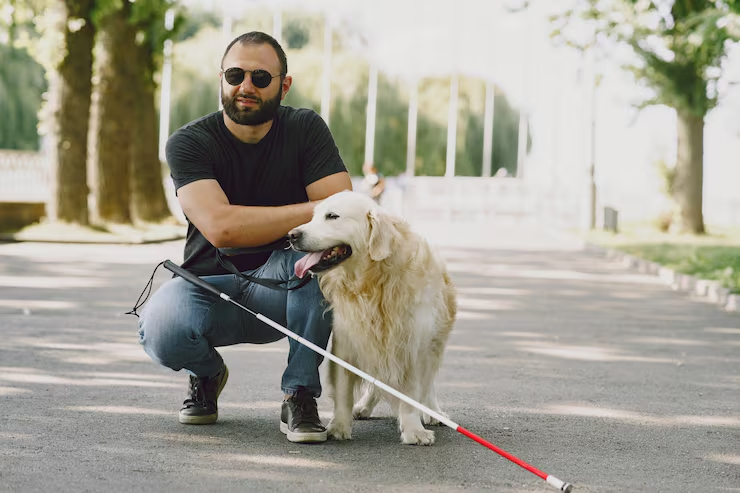
When does legitimate verification become an invasion of privacy? And when does protecting privacy make it difficult to distinguish legitimate needs from fraudulent claims?
The same questions can arise when people are asked to provide a doctor’s note for work, school or another official purpose.
The Difficult Balance Between Privacy and Verification
Medical information is personal.
A person should not have to disclose their entire medical history every time they need an accommodation or encounter a situation where their disability is relevant.
At the same time, organizations often have legitimate reasons for needing certain information.
An employer may need to know whether an employee has a medical restriction.
A school may need documentation relating to an absence.
A hotel may need to follow applicable rules concerning service animals.
The challenge is determining what information is actually necessary.
There is a major difference between asking for relevant documentation and demanding someone’s complete medical records.
A Doctor’s Note Is Not a Window Into Someone’s Entire Medical History
When I think about a doctor’s note now, I see it differently.
A properly prepared medical note does not necessarily need to explain every detail about a person’s health.
Depending on the circumstances, documentation may simply confirm that a person was medically evaluated and provide information relevant to the specific request.
For example, a workplace note might address whether someone needs time away from work or has particular restrictions.
It does not necessarily need to provide every detail about the patient’s private medical history.
That distinction is important.
Documentation should communicate what is necessary without unnecessarily exposing private information.
The Problem With Asking for “Proof”
The word “proof” sounds simple until you ask what it actually means.
If somebody says they have a medical condition, what document proves it?
A doctor’s note?
A medical record?
A specialist’s assessment?
A prescription?
A disability identification card?
A diagnosis?
And who gets to see that information?
Once those questions are asked, the issue becomes considerably more complicated.
Medical documentation is not simply an ordinary receipt.
It contains information about a person’s health, and health information deserves appropriate protection.
What About Service Dogs?
The service-dog discussion demonstrates why this is difficult.
A person may have a legitimate disability that is not visually obvious.
Their service dog may perform an important task that another person cannot see.
The absence of a visible disability does not automatically mean that the person is making a false claim.
At the same time, an untrained pet represented as a service animal can create legitimate problems.
A business may have concerns about safety, cleanliness, disruption or interactions with other customers and animals.
This is why service-animal rules are generally structured around what the animal is trained to do rather than simply requiring strangers to know the person’s diagnosis.
The precise rules depend on the jurisdiction and setting, so businesses and individuals should rely on the applicable legal requirements rather than assuming that a generic doctor’s note settles every question.
The Same Principle Applies to Workplace Medical Notes
I have also seen this issue from the perspective of people searching for a doctor’s note for work.
An employee might be asked:
“Can you provide medical documentation?”
At first, that sounds straightforward.
But the employee may immediately wonder:
“How much information do I have to reveal?”
Do they need to provide their diagnosis?
Do they need to explain their symptoms?
Does HR need their complete medical history?
Who will see the documentation?
Those are reasonable questions.
A medical note should be appropriate for its purpose.
If the purpose is to confirm that someone was medically evaluated and needs a certain period of leave, the documentation should focus on information relevant to that purpose.
My Experience Searching for Medical Documentation
When I started looking into options for obtaining legitimate medical documentation, I realized that the biggest issue was not simply finding a website that offered a “doctor’s note.”
There are many websites using similar language.
The more important question is whether the person is receiving an actual healthcare evaluation.
That distinction became particularly important after reading conversations about supposedly fake medical notes.
If I need documentation for work, I want the documentation to be connected to legitimate healthcare.
That means discussing my symptoms with a healthcare professional, providing accurate information and allowing the clinician to determine what can appropriately be documented.
For people looking for urgent-care information in Texas, www.nextlevelurgentcaretexas.us provides information about healthcare and medical evaluation options.
The goal should be healthcare first and documentation second.
Why “Just Get a Doctor’s Note” Is Not Always Simple
People sometimes say:
“Just get a doctor’s note.”
But that sentence can hide a surprisingly complicated process.
A person may not have an established primary-care provider.
Their usual doctor may have no appointments available.
They may work during normal clinic hours.
They may have transportation difficulties.
They may need a healthcare provider who can evaluate a particular concern.
And sometimes the requested documentation involves a condition that requires specialist assessment.
This is why accessible urgent care and telehealth options can be useful for appropriate situations.
Convenience can remove some of the practical barriers between a person and healthcare.
But convenience should never mean that a medical professional simply signs whatever a person requests without evaluating them.
What Makes Documentation Legitimate?
For me, legitimate medical documentation comes down to one fundamental principle:
There should be a real healthcare encounter behind it.
The patient explains what is happening.
The healthcare professional evaluates the situation.
The clinician makes an independent medical judgment.
If documentation is appropriate, the clinician prepares it based on the evaluation.
That process protects everyone involved.
It protects the patient because the documentation reflects genuine healthcare.
It protects the healthcare professional because the information is based on their clinical assessment.
And it gives the organization receiving the documentation a reasonable basis for relying on it.
Privacy Does Not Mean No Accountability
Another lesson I took from the service-dog debate is that privacy and accountability are not necessarily opposites.
We can protect someone’s medical privacy while still expecting truthful representations.
A person should not necessarily have to reveal their diagnosis to every business employee they encounter.
But that does not mean that people should be free to falsely claim a medical condition, falsify documentation or misrepresent an animal.
There is a middle ground.
That middle ground involves clear rules, appropriate documentation where required, respect for privacy and honest communication.
What I Would Ask Before Providing a Medical Note
If I were asked to provide a doctor’s note for work or school, I would want to know exactly what is required.
I would ask:
- What information does the organization need?
- Is confirmation of medical evaluation sufficient?
- Are specific dates required?
- Are work or school restrictions relevant?
- Who will have access to the document?
- Is there a specific form that must be completed?
Those questions can prevent unnecessary disclosure.
They can also help the healthcare professional understand what the documentation is intended to accomplish.
The Bigger Lesson
The service-dog conversation started with a seemingly simple question:
“What proof do you want?”
But there may not be a simple answer.
Too little verification can create opportunities for dishonest claims.
Too much verification can unnecessarily expose someone’s private medical information.
The same tension exists with workplace and school medical documentation.
People need a practical way to demonstrate legitimate medical circumstances without being forced to disclose more personal information than necessary.
For anyone searching for a doctor’s note for work, medical documentation, urgent-care evaluation, return-to-work note or online healthcare appointment, the safest approach is to focus on legitimate medical care rather than simply obtaining a document.
If you are exploring healthcare options in Texas, www.nextlevelurgentcaretexas.us can be used to learn more about available services.
Ultimately, the value of a doctor’s note should come from the professional evaluation behind it.
And perhaps that is the most important distinction of all:
Privacy should be respected, but legitimate medical documentation should still be grounded in legitimate healthcare.
