
I remember the day I opened my jury-duty summons. It was an ordinary afternoon, but the letter immediately changed my mood.
I had already been going through a difficult period with my mental health. My anxiety had become unpredictable, my sleep was poor, and I was finding it harder to concentrate on everyday responsibilities. Some days were manageable. Other days, even leaving the house felt like a major task.
Then came the jury summons.
At first, I felt guilty for even thinking that I might not be able to serve. Jury duty is an important civic responsibility, and I did not want anyone to think I was simply looking for a way to avoid it.
My concern was different.
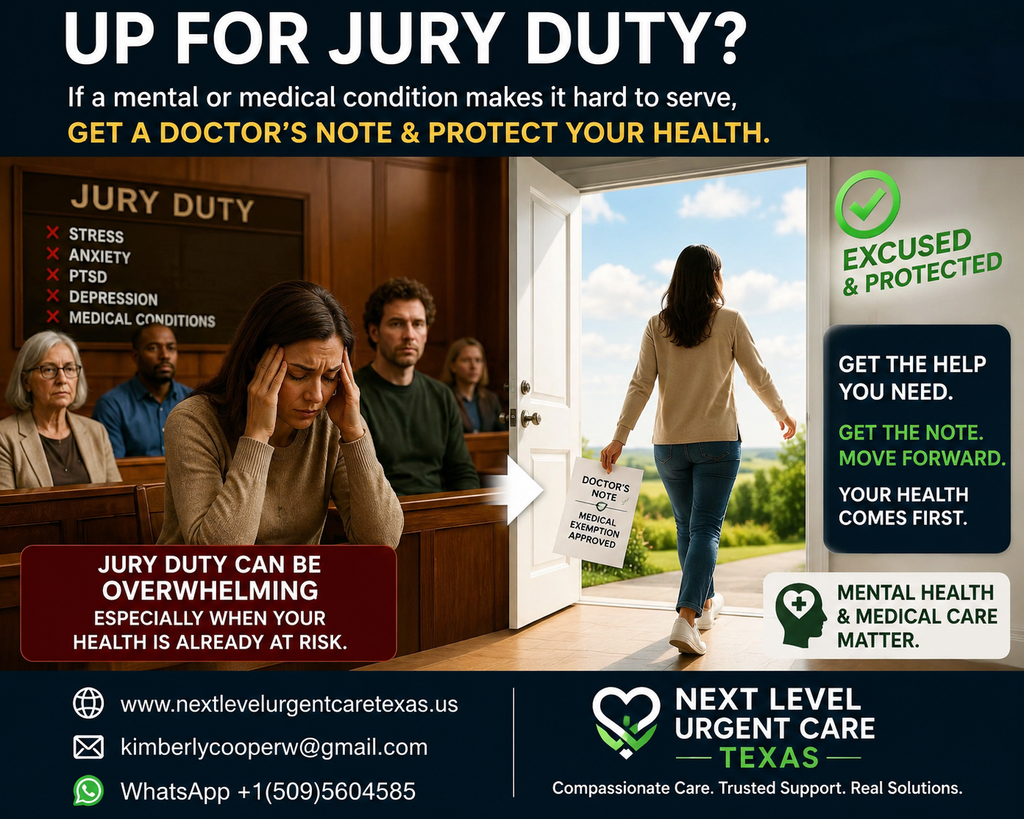
I honestly did not know whether my mental and emotional condition would allow me to participate effectively.
The Jury Summons Came at the Worst Possible Time
The timing could not have been worse.
I was already trying to regain some stability. I was working on getting better, managing appointments, trying to sleep normally, and learning how to deal with stressful situations.
The thought of sitting in a courtroom for hours, listening carefully to testimony, following complicated instructions, and remaining focused throughout the process made me extremely anxious.
I started searching online for answers.
I searched phrases such as:
- mental health jury duty
- doctor’s note for jury duty
- medical excuse for jury duty
- jury duty excuse for anxiety
- jury duty and depression
- psychiatric evaluation for jury duty
- medical documentation for jury duty
- can a doctor write a note for jury duty?
I found plenty of information, but I quickly realized something important: there is a difference between obtaining medical documentation and actually being excused from jury service.
The healthcare provider can evaluate the medical situation. The court ultimately determines whether a person is excused, postponed, deferred, or otherwise accommodated according to the applicable rules.
That distinction helped me approach the situation more responsibly.
I Wasn’t Trying to Escape Responsibility
This was the part I wanted people to understand.
I wasn’t trying to avoid jury duty because I didn’t care.
I was worried that my current mental-health condition could interfere with my ability to perform the responsibilities expected of a juror.
Mental illness isn’t always visible.
A person can walk into a courtroom looking completely fine while privately experiencing severe anxiety, depression, panic symptoms, emotional instability, sleep deprivation, or difficulty concentrating.
That was my reality.
I knew I needed to take the summons seriously rather than simply ignore it.
Finding NextLevelUrgentCareTexas.us
While looking for information about medical documentation, I came across NextLevelUrgentCareTexas.us.
What interested me was the possibility of discussing my health situation with a healthcare professional rather than trying to create my own excuse.
I didn’t want a generic piece of paper.
I wanted to understand whether my actual health circumstances were medically significant and whether appropriate documentation could be provided if a provider determined that it was justified.
That difference gave me more confidence in approaching the process.
Explaining My Mental Health Was the Hardest Part
Talking about mental health wasn’t easy.
It can be difficult to explain something that other people cannot see.
I had to describe how anxiety affected my concentration. I had to explain how stress affected my ability to function. I had to talk about sleep problems and the emotional instability I had been experiencing.
I also had to be honest about what I could and couldn’t manage.
That was important because a medical professional shouldn’t simply write whatever a patient requests. A provider needs to make an independent assessment based on the information available.
My goal was not to tell the provider what conclusion to reach.
My goal was to explain what was happening to me.
Mental Health Can Affect Everyday Functioning
One of the things I learned from the experience was that mental health isn’t simply about having a diagnosis.
What matters in many situations is how symptoms affect a person’s functioning.
For example, someone experiencing significant anxiety may have difficulty concentrating.
Someone experiencing depression may struggle with motivation and sustained attention.
Someone experiencing panic symptoms may have difficulty remaining in stressful environments.
Someone experiencing severe sleep disruption may have trouble processing information or maintaining attention.
That doesn’t mean everyone with a mental-health condition is unable to serve jury duty.
Many people with mental-health conditions work, study, raise families, participate in their communities, and serve on juries.
The circumstances are different for every person.
For me, the issue was my condition at that particular time and whether it affected my ability to participate responsibly.
Why Accurate Medical Documentation Matters
I learned that a doctor’s note for jury duty should not be treated like a guaranteed ticket out of jury service.
Medical documentation should reflect the patient’s genuine medical circumstances.
If a healthcare provider determines that a condition affects someone’s ability to participate, appropriate documentation may explain the relevant limitations or recommendations.
The document may then be submitted through whatever process the court requires.
The court reviews the request and makes the appropriate determination.
That distinction is extremely important.
Searching for a medical excuse for jury duty should not mean searching for a guaranteed result. It should mean finding an appropriate way to document a genuine medical concern.
I Also Became More Careful About Privacy
Because my situation involved mental health, I became very conscious of privacy.
I didn’t want to provide unnecessary personal information to everyone involved.
A healthcare provider may have detailed clinical information about a patient’s condition. A court or jury administration office may only require particular information to evaluate a request.
The right documentation should be relevant to its purpose.
That was another reason I preferred to approach the issue professionally instead of writing my own explanation or sending unnecessary personal details.
What I Learned About Jury Duty and Mental Illness
The experience changed how I think about people who request medical consideration for jury service.
Before receiving my own summons, I might have assumed that someone asking for an excuse simply didn’t want to participate.
Now I understand that there can be an entirely different story behind that request.
Someone may be experiencing severe anxiety.
Someone may be recovering from depression.
Someone may be dealing with panic attacks.
Someone may be receiving treatment for a psychiatric condition.
Someone may have a medical condition that makes prolonged courtroom participation difficult.
And sometimes, none of it is obvious from the outside.
Don’t Ignore the Jury Summons
One of the biggest lessons I learned was that ignoring the summons wasn’t the answer.
If your mental or physical health makes jury service difficult, the responsible approach is to read the instructions carefully and follow the court’s process.
If medical documentation is required, speak with an appropriate healthcare professional.
Explain your actual circumstances.
Ask what documentation may be appropriate.
Then submit the information according to the instructions provided by the court.
A healthcare provider does not decide the legal outcome of a jury-duty request. The court does.
That is why people should be cautious about websites or services promising that a particular document will automatically guarantee an exemption.
My Experience With NextLevelUrgentCareTexas.us
For me, the most valuable part of the experience was realizing that I didn’t have to handle everything by myself.
I could explain what I was experiencing.
I could seek professional medical guidance.
I could obtain documentation if it was medically appropriate.
And I could allow the court to make the final decision regarding my jury service.
That approach felt much more responsible than simply searching for a way to “get out of jury duty.”
My mental health deserved to be taken seriously, but so did the responsibilities associated with receiving an official jury summons.
A Different Perspective on a Jury Duty Medical Excuse
Looking back, I don’t think my experience was really about finding an excuse.
It was about finding a responsible way to communicate a genuine health problem.
The words “jury duty” can sound simple until you receive a summons during one of the most difficult periods of your life.
For someone experiencing mental-health instability, anxiety, depression, PTSD symptoms, panic attacks, or another condition affecting daily functioning, jury service can create additional stress.
That doesn’t automatically mean the person cannot serve.
It means the person’s current circumstances may deserve professional evaluation.
If you are searching for a doctor’s note for jury duty, mental health jury duty excuse, medical documentation for jury service, psychiatric documentation for jury duty, jury duty postponement due to illness, or medical excuse for jury duty, remember that the process is about truthful medical information—not guaranteed approval.
My experience taught me something I won’t forget:
Asking for medical help isn’t the same as avoiding responsibility. Sometimes, taking your health seriously is part of being responsible.
For anyone facing a similar situation, start with the official instructions on your jury summons, seek appropriate medical advice when needed, and provide truthful documentation through the proper channels.
Your health matters—but so does following the correct legal process.
